
Redcat Vertex-10 RTR Review: Can This Rig Take on the Big Dogs?
Redcat Racing isn’t exactly new to the rock-crawling game. The company has built a reputation for offering capable crawlers at prices that often undercut the biggest names in the hobby.
But the Vertex-10 is different.
Instead of simply offering another affordable trail truck, Redcat built the Vertex-10 around a lightweight carbon-fiber chassis, brushless power, portal axles, high-steer geometry, and a drivetrain designed specifically for technical crawling.
At (Check price here), it’s also entering a much more serious part of the 1/10 crawler market.
So the obvious question is:
Can Redcat’s Vertex-10 compete with the established performance crawlers that serious enthusiasts already know and trust?
Let’s take a closer look!
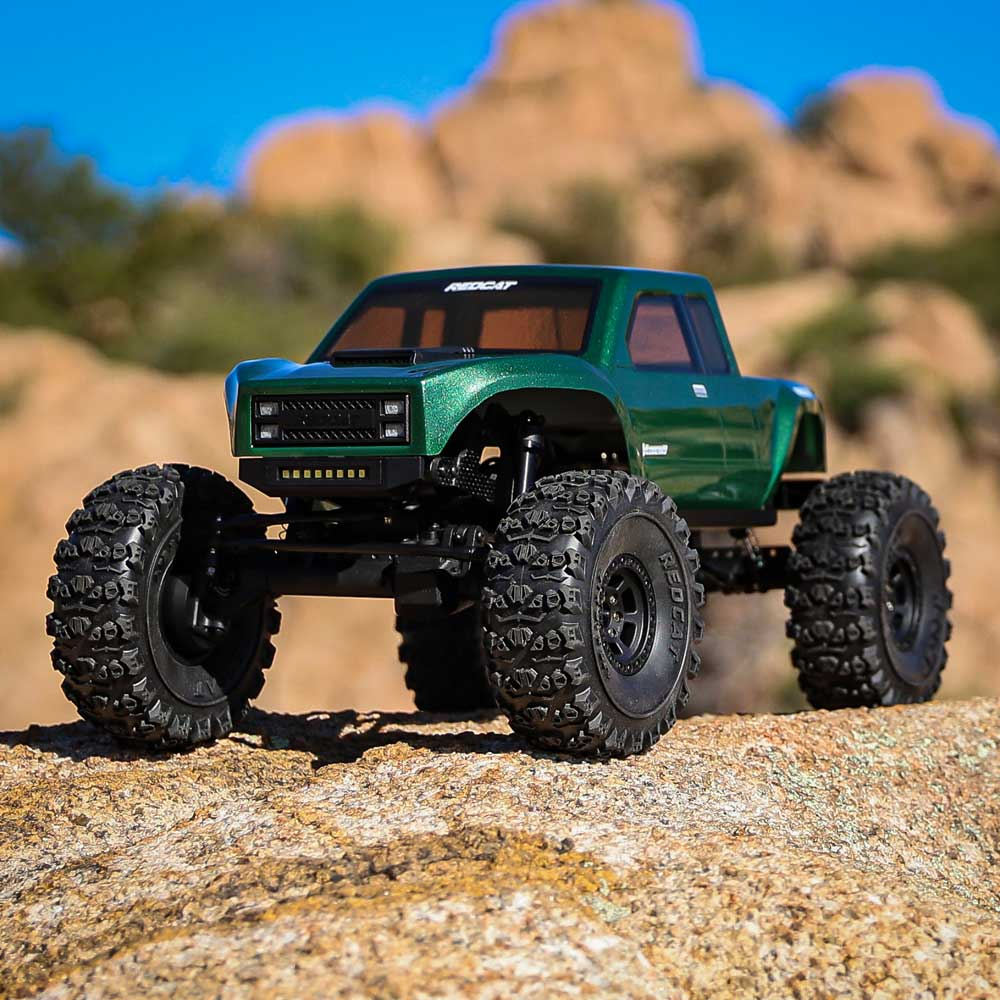
What Is the Redcat Vertex-10?
The Vertex-10 is a 1/10-scale, four-wheel-drive brushless rock crawler designed around technical crawling rather than simply looking like a scale trail truck.
Redcat’s current Vertex-10 platform uses a 3mm carbon-fiber chassis, portal axles, aluminum-bodied oil-filled air-emulsion shocks, a Hobbywing brushless power system, and a 50kg Hexfly brushless steering servo.
The standard Vertex-10 is also part of a larger family. Redcat offers a wider Vertex-10W, as well as Slider versions that allow builders to choose their own electronics and components.
That makes the Vertex platform more than just one RTR truck. It’s really a performance-crawling ecosystem.
The Carbon-Fiber Chassis Is a Big Deal
One of the first things that separates the Vertex-10 from a conventional trail crawler is the chassis.
Redcat uses a 3mm carbon-fiber chassis, giving the truck a rigid backbone without adding unnecessary weight. Carbon fiber is particularly interesting on a crawler because keeping weight low in the chassis can help reduce the tendency to roll when climbing steep or off-camber terrain.
The Vertex-10 also uses carbon-fiber components in several other areas of the chassis, including the rear shock towers, transmission case end plates, and behind-the-axle servo mount.

Brushless Power From Hobbywing
The Vertex-10 doesn’t rely on the typical brushed motor found in many RTR crawlers.
Redcat equips it with a Hobbywing 2812 1700KV brushless outrunner and a Hobbywing WP-10BL60 programmable brushless ESC. The system is rated for 2S–4S LiPo batteries, although the battery and charger aren’t included with the RTR truck.
That is a pretty serious electronics package for a crawler.
And brushless power isn’t just about going faster.
For technical crawling, what matters is the ability to control the truck smoothly at very low speeds while still having enough power available when an obstacle requires it.
Portal Axles and High-Clearance Geometry
The Vertex-10 uses portal axles to increase clearance underneath the axles.
That’s important because axle housings are often one of the first things to hang up when you’re crawling over rocks.
Redcat also uses high-position hypoid-cut ring and pinion gears and a 3:1 portal gear ratio. The standard Vertex-10’s drivetrain has approximately 20% total overdrive, helping give the front axle additional pulling authority during climbs.
This is one of those areas where the Vertex-10 starts looking less like a conventional trail truck and more like a purpose-built performance crawler.

58 Degrees of Steering
Steering is another area where Redcat has clearly focused on performance.
The Vertex-10 uses high-steer axles and double-CV front shafts, allowing up to 58 degrees of steering angle. The double-CV design is intended to maintain smooth articulation at those extreme steering angles.
That’s important on technical lines.
When you’re trying to work around a rock rather than simply drive over it, steering angle can be the difference between finding a line and backing up to try again.

A 50kg Brushless Steering Servo
The steering servo is another area where Redcat didn’t go cheap.
The Vertex-10 uses a Hexfly HX-50BL 50kg brushless servo, rated at 50kg-cm at 8.4V.
That’s a substantial amount of steering power for a 1/10 crawler.
For serious crawling, a strong servo isn’t a luxury. Large tires, heavy wheels, and tires wedged against rocks can put enormous loads into the steering system.
A powerful servo gives the driver a better chance of actually moving those tires when they’re loaded against an obstacle.
Suspension: Built for Technical Terrain
Redcat uses aluminum-bodied oil-filled air-emulsion shocks on the Vertex-10.
The truck also uses a four-link suspension arrangement designed to provide controlled axle movement while maintaining the articulation needed for uneven terrain.

The Tires and Wheels
The standard Vertex-10 uses 1.9-inch wheels and tires designed around its narrower performance-crawling configuration. The wider Vertex-10W steps up to 2.2-inch wheels and 5.25-inch tires.
That’s an important distinction when comparing the two trucks.
The standard Vertex-10 is designed around precision and maneuverability, while the Vertex-10W’s wider stance is intended to provide additional stability on steep and loose terrain. Redcat lists the W version at 228mm hex-to-hex versus the standard truck’s narrower configuration.
Ready to Run, But Bring Your Own Battery
The Vertex-10 comes ready to run, including the 2.4GHz radio system, but you’ll need to provide your own battery and charger. Redcat specifies a 2S–4S LiPo for the brushless system, along with four AA batteries for the transmitter.
This is worth mentioning prominently because someone buying their first serious crawler may otherwise assume everything necessary is in the box.
The upside is that experienced RC enthusiasts probably already have compatible batteries and chargers.
Vertex-10 Specifications
| Specification | Redcat Vertex-10 |
|---|---|
| Scale | 1/10 |
| Drive | 4WD |
| Motor | Hobbywing 2812 1700KV brushless |
| ESC | Hobbywing WP-10BL60 |
| Battery | 2S–4S LiPo |
| Chassis | 3mm carbon fiber |
| Steering servo | Hexfly 50kg brushless |
| Steering angle | Up to 58° |
| Suspension | 4-link |
| Shocks | Aluminum oil-filled air-emulsion |
| Radio | RTX-4C 4-channel |
| Battery included | No |
| Charger included | No |
How Does the Vertex-10 Actually Crawl?
On paper, the Vertex-10 has the hardware you’d expect from a serious performance crawler:
- Carbon-fiber chassis
- Portal axles
- 58° steering
- Brushless power
- High-torque brushless servo
- Four-link suspension
- Overdrive
- High-clearance drivetrain
But specifications don’t tell the entire story. It is only something you can experience.
Pros
- Brushless powertrain
- 3mm carbon-fiber chassis
- High-clearance portal axles
- 58° steering angle
- 50kg brushless steering servo
- Oil-filled aluminum shocks
- 4-link suspension
- Strong performance-oriented drivetrain
- 2–4S capability
- Extensive Vertex platform with RTR and Slider configurations
Cons
- Serious money for an RTR crawler (But it IS a serious crawler)
- Battery and charger aren’t included
- More performance-oriented than scale-focused
- The standard Vertex-10 isn’t as wide or stable as the Vertex-10W
- May be more crawler than a casual trail driver actually needs
Final Verdict
The Redcat Vertex-10 represents a significant step beyond the company’s traditional budget-friendly crawler image.
It’s lightweight, heavily performance-focused, and packed with features normally associated with much more specialized competition-oriented rigs.
For someone looking for a serious 1/10 crawler with brushless power and a modern LCG-style chassis, the Vertex-10 deserves to be on the shortlist.
For someone primarily interested in scale realism and casual trail driving, there are less expensive options that may make more sense.
But if your goal is to find lines that other crawlers can’t—and then actually make it up them—the Vertex-10 is clearly designed with that mission in mind.